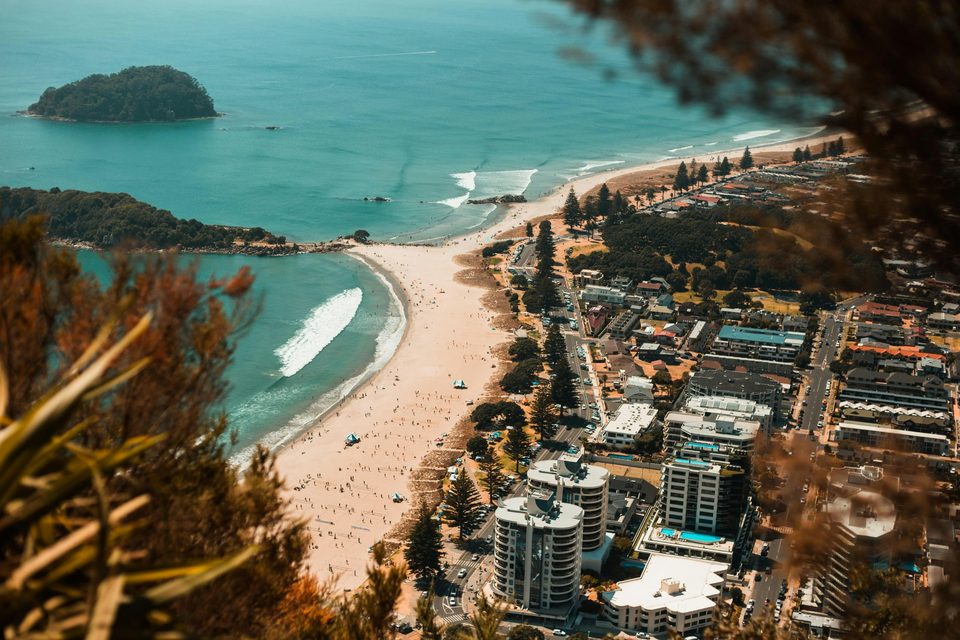
Bay of Plenty · North Island
Moving to
Tauranga
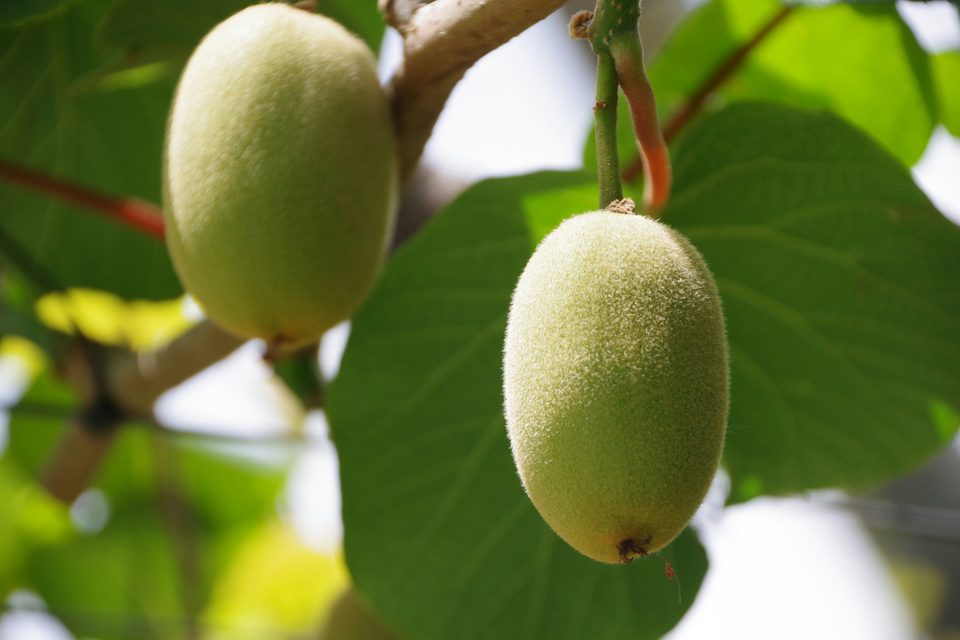
Beaches, kiwifruit orchards and New Zealand's busiest port, all around one sunny harbour. Here is what it is really like to live and work here.
- 161,300people (June 2024)
- $700/wkmedian rent, all homes
- 2,400sunshine hours a year (about)
- 25.3mtonnes through the port a year
30-second check
Is Tauranga right for you?
Three quick questions about lifestyle and work. It is a bit of fun, not advice, and it says nothing about visas.
0%
Tauranga could suit you well
Your answers match what Tauranga does best: the outdoors, orchards and the port. This is about lifestyle only, so check the visa and job side separately.
Worth a closer look
Tauranga suits some of what you want. Read the jobs and weather sections below, and compare it with other cities.
Maybe, but compare other cities
Another city may suit your lifestyle better. Try our other city guides, or talk it through with us.
What Tauranga is known for
Swipe through the industries behind the jobs.
Work in Tauranga
Most jobs here connect to a few things: growing and packing fruit, moving freight through the port, building for a growing population, and caring for it. Kiwifruit work is seasonal, with the busiest period in autumn, so many jobs are for a few months rather than year-round. The port, building and care sectors hire all year.
Whether you can take a job depends on your visa. Read the work visa guide and, for orchard and packhouse work, the seasonal work guide first.
The weather
Tap a season. The bars show the average daytime high for each month.
24°
average daytime high, December to February
Warm and sunny. The beaches are busy and it is the season for swims and evening walks.
20°
average daytime high, March to May
Still warm in March, then cooling. This is when the kiwifruit harvest gets going.
15°
average daytime high, June to August
Mild by day, cooler at night. Bring a warm jacket for the evenings.
19°
average daytime high, September to November
Warming up month by month, with the first beach days arriving towards the end.
- 24°Jan
- 24°Feb
- 23°Mar
- 20°Apr
- 18°May
- 15°Jun
- 15°Jul
- 15°Aug
- 17°Sep
- 19°Oct
- 21°Nov
- 23°Dec
Source: NIWA climate averages 1991–2020 for Tauranga (mean daily maximum, rounded; seasonal figures are the average of three months, rounded). Tauranga gets about 2,400 hours of sunshine a year (NIWA's 1991–2020 average is 2,401.5 hours).
A day in Tauranga
Swipe →


What life is like
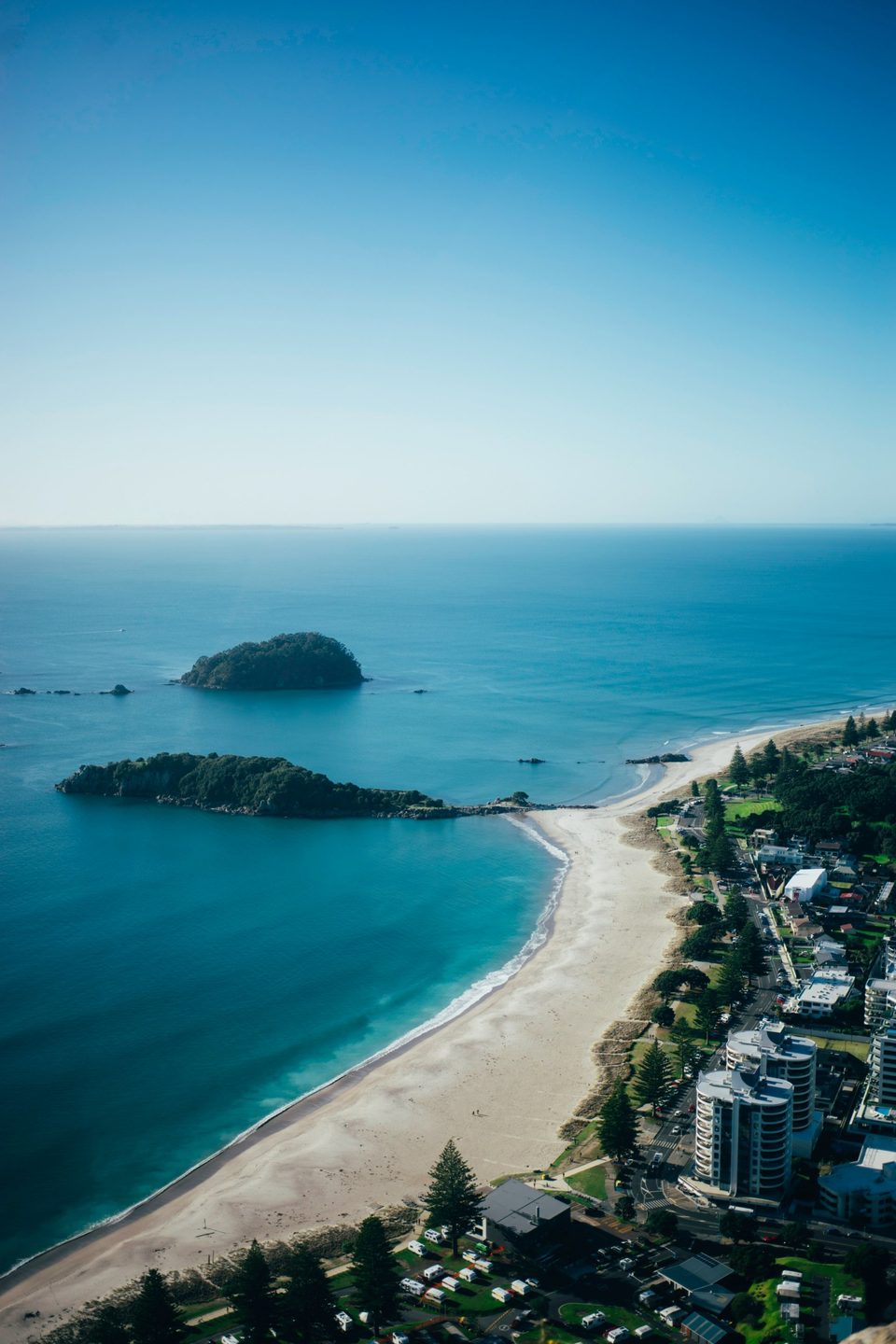
Tauranga is a beach-and-orchard city that has grown fast. The pace is relaxed, and a lot of life happens outdoors: a swim before work, a walk around the base of the Mount, a weekend at the beach. It is also a working city, with a busy port and a lot of building going on.
It is not a big-city experience. Buses run, but there is no passenger train, so a car makes life easier for most people. Rent is a real cost, and the median across all homes is $700 a week, so budget before you commit.
What locals love
- Long beaches at Mount Maunganui and Pāpāmoa
- Walking up Mauao for the view
- About 2,400 hours of sunshine a year
- Mild winters, with daytime highs around 15°
Good to know
- Median rent is $700 a week across all homes
- No passenger train, so a car helps
- Orchard work is seasonal, so income can rise and fall
- Some specialist jobs are easier to find in a bigger city
Visas, study and community
Which visas fit
People move to Tauranga on many different visas. The most common routes are a work visa with an accredited employer, seasonal work schemes for orchard and packhouse work, student visas for study here, and partner or family visas. Which one suits you depends on your own situation, and the rules change, so always check Immigration New Zealand.
Work visas → · Seasonal work (RSE) → · Study visas → · Partner and family → · Residence →
Costing a move to Tauranga? Work out the INZ fee for your visa with the visa fee calculator.
Immigration New Zealand's contact page lists no office you can visit in Tauranga. It gives phone numbers instead: 0508 558 855 (free from New Zealand landlines) or +64 9 914 4100 in Auckland, 6am to 10pm on weekdays. Most people apply online.
Study
The University of Waikato has a campus in Tauranga's city centre (101-121 Durham Street), offering degrees, diplomas and certificates, including a Bachelor of Science in Marine Science. Toi Ohomai Institute of Technology has its Windermere Campus in Tauranga.
Check each institution's own site for courses, fees and entry rules. Student visa guide →
Community
Tauranga City Council runs a Welcoming Communities programme with a resource guide for new residents, a list of newcomer settlement support, and links to English classes and interpreting services.
The Tauranga Regional Multicultural Council, founded in 1994, offers settlement advice, ESOL classes and interpreting, and is listed in the government's ethnic communities directory.
You can also ask questions in our community forum →
Get help, wherever you are
You do not need to be in Tauranga to get help. Book a free 20-minute chat by phone or video, anywhere in New Zealand or overseas. We give general information, not personal immigration advice.
Book a free chatLast checked